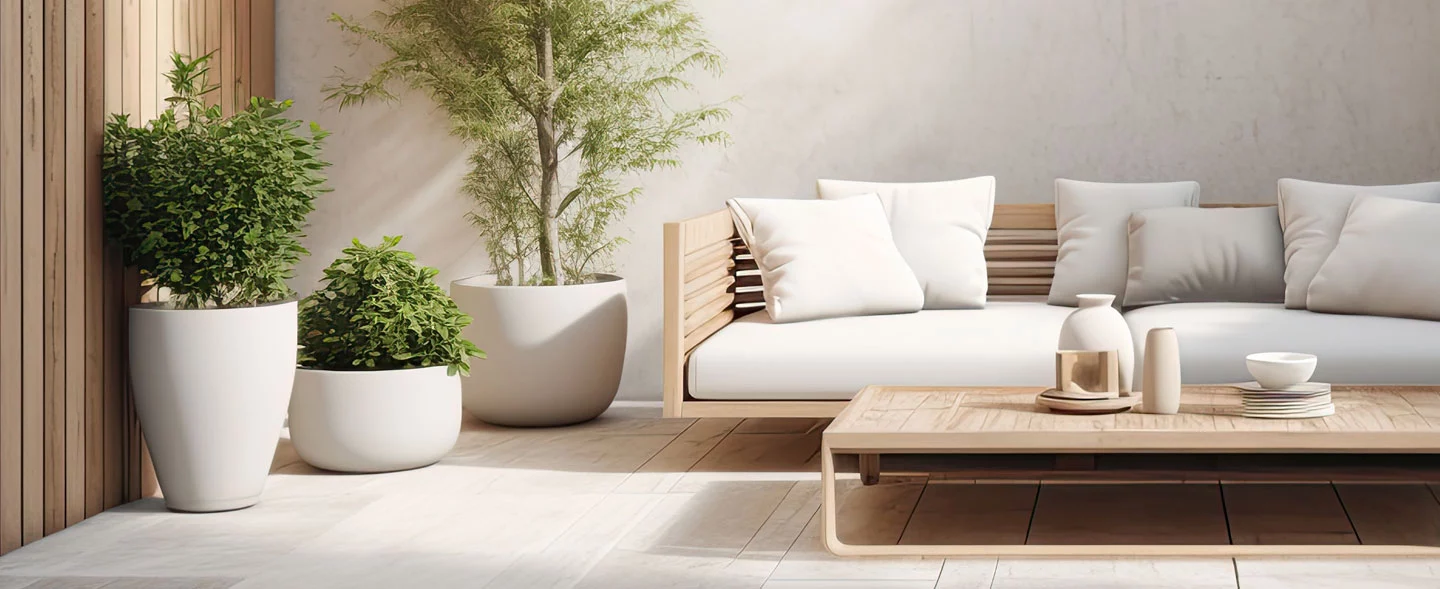
Choosing the right planters for your balcony and patio
Carefully selected plants in attractive pots enhance any patio and create a relaxing atmosphere on balconies. The right combination of planters really brings out the best in your plants. They need to appeal not only to you but also to the plants themselves. Here are a few factors to consider when making the right choice.
Material: Planters are available in a variety of materials, including clay, plastic, metal, concrete and wood. A recent development is composite materials containing recycled components, which are frost-resistant and shatterproof. Each material has its own advantages and disadvantages. For example, clay allows the soil to breathe better, whilst plastic is lighter and easier to clean.
Size: Make sure to choose planters that are large enough to give the plants sufficient space to grow. Planters that are too large encourage excessive root growth, which isn’t necessarily beneficial. The size of the pots should also suit the space where you intend to place them. Tall pots are ideal for balconies and entrance areas. They take up less space and make it easier to admire the plants.
Weight: The weight of the planters is particularly important if you need to be able to move them. Large pots made from materials such as concrete can be very heavy. Plants that cannot remain outside during winter, in particular, will need to be moved together with their pots.
Insulation: Some materials, such as clay or concrete, offer natural insulating properties that can help protect the plants’ roots from extreme temperatures. This is particularly important if the plants remain outside during winter.
Drainage holes: Make sure the planters have sufficient drainage holes to allow excess water to drain away. Stagnant water can cause root rot. On balconies, a saucer is essential. Some planters also come with castors, so you can move your plants under a sheltered roof during heavy rain.
Style and design: Choose planters that complement the overall style of your patio or garden. Different shapes, colours and textures can create visual interest. If you prefer a minimalist look, opt for simple shapes and avoid putting several plants in one pot.
Weather resistance: Take the weather conditions in your region into account. Some materials are more susceptible to the elements. Terracotta, for example, can easily crack in frost. New composite materials are break-resistant yet still have a naturally beautiful appearance.
Mobility: If you want the flexibility to move planters around as required, choose lighter materials or those with built-in castors. There are pots suitable for both indoor and outdoor use. When used indoors, ensure you use appropriate coasters to prevent delicate wooden floors from becoming mouldy or scratched.
Maintenance: Consider how much time and effort you’re prepared to put into looking after your plants. Some materials require more maintenance than others. Plastic, for example, is low-maintenance, whilst wood needs to be treated regularly. Plants that are also kept indoors, in particular, should be grown in pots that are easy to clean. Many houseplants enjoy being outdoors from spring onwards.
Budget: Set your budget and look for planters that fit within it. There is a wide range of prices, depending on the material and design.
Bear in mind that your choice of planters should be not only functional but also aesthetically pleasing. By choosing carefully, you can ensure that your plants not only thrive but also blend harmoniously into the overall design of your patio, balcony or garden.

