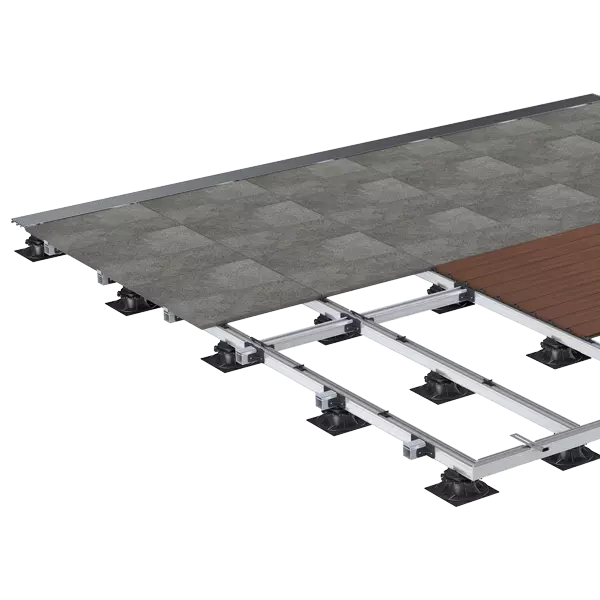

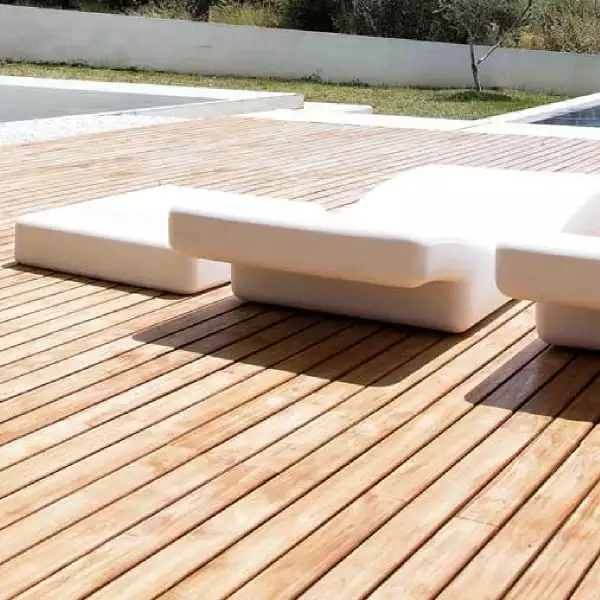
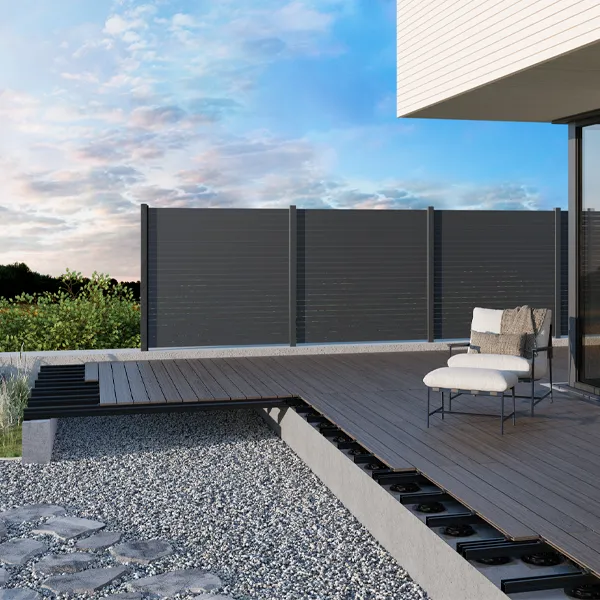

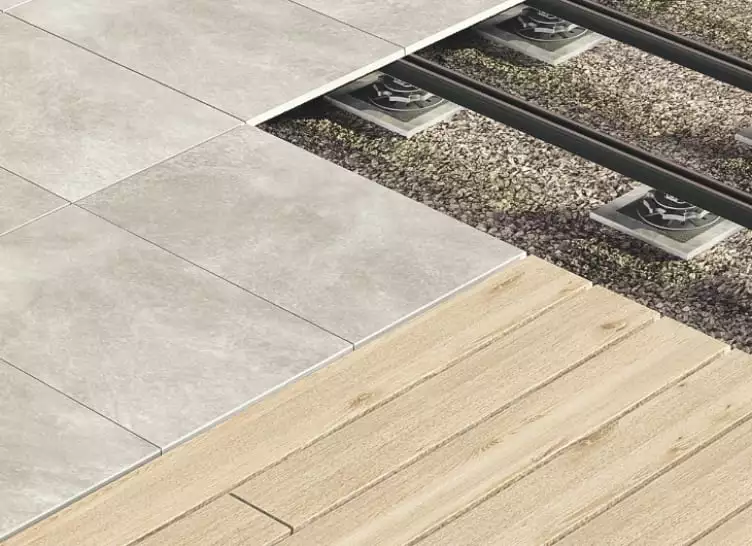
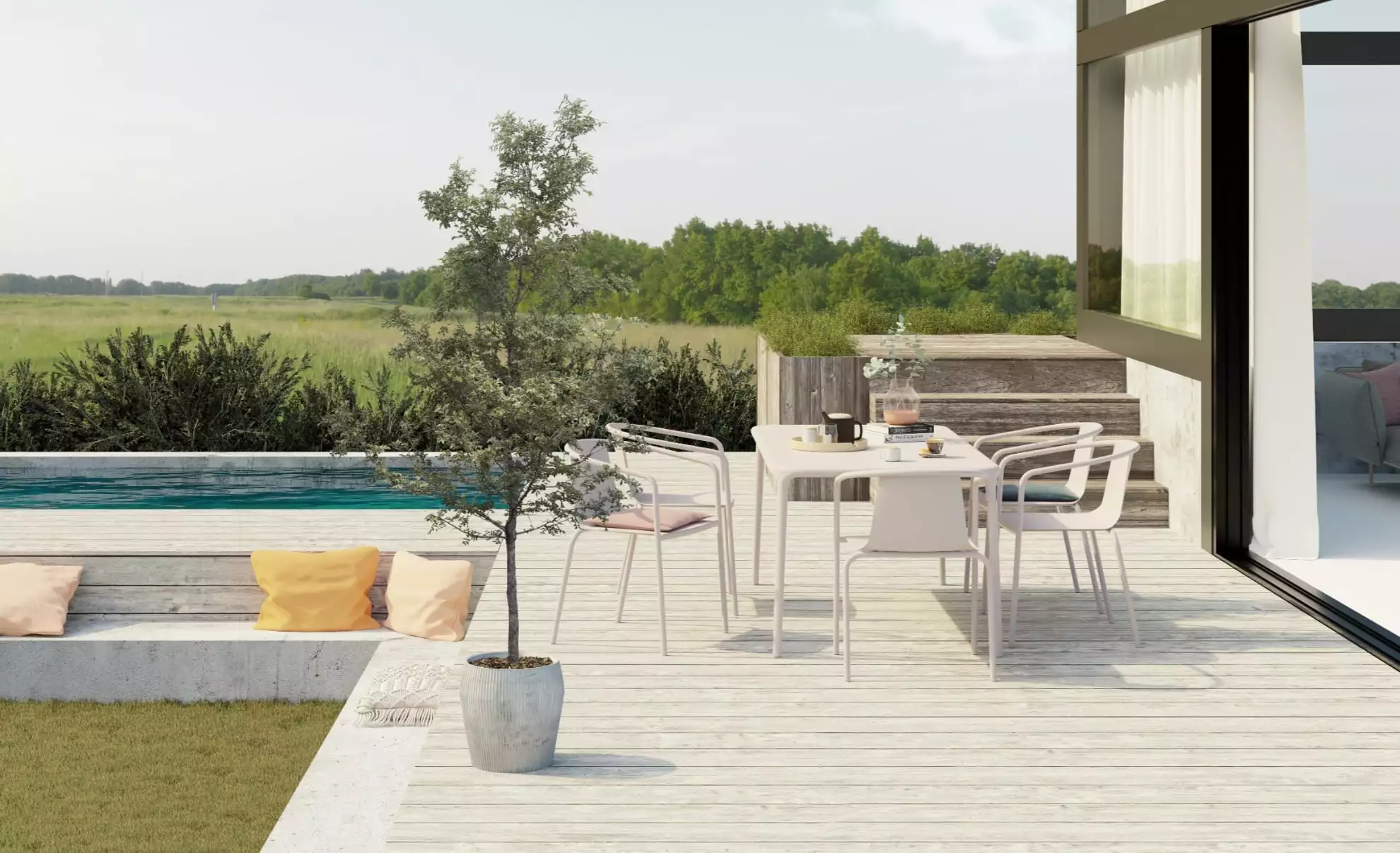
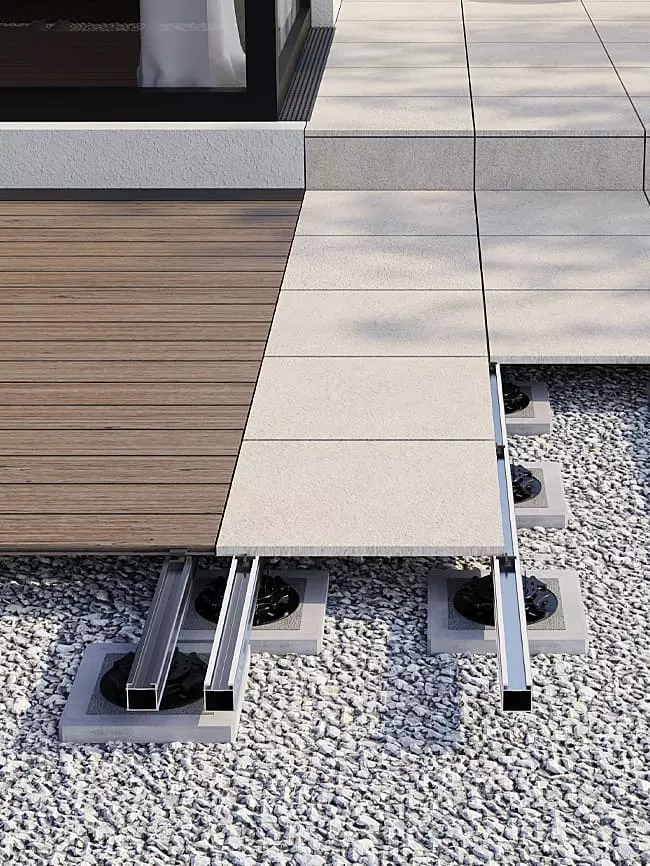
You can choose between decking boards and stone slabs, or combine the two. For decking boards (20 mm thick and above), hardwood, thermally treated timber, softwood and composite materials (WPC, BPC) are available. Terrace slabs are available in natural stone, ceramic or porcelain stoneware, with a thickness of 10 mm and above.
Planning a terrace on a solid foundation with an aluminium substructure
If you want to enjoy your decking for many years to come, start with a solid and stable substructure. With a TRIAS aluminium decking substructure, you can create the perfect foundation – durable, versatile and adaptable. Whether you prefer timber or WPC decking boards, both types can be screwed down invisibly. Thanks to its high load-bearing capacity and large spans, the framework also offers optimum stability for stone or ceramic patio slabs.
Aluminium decking substructure:
three profiles for every purpose
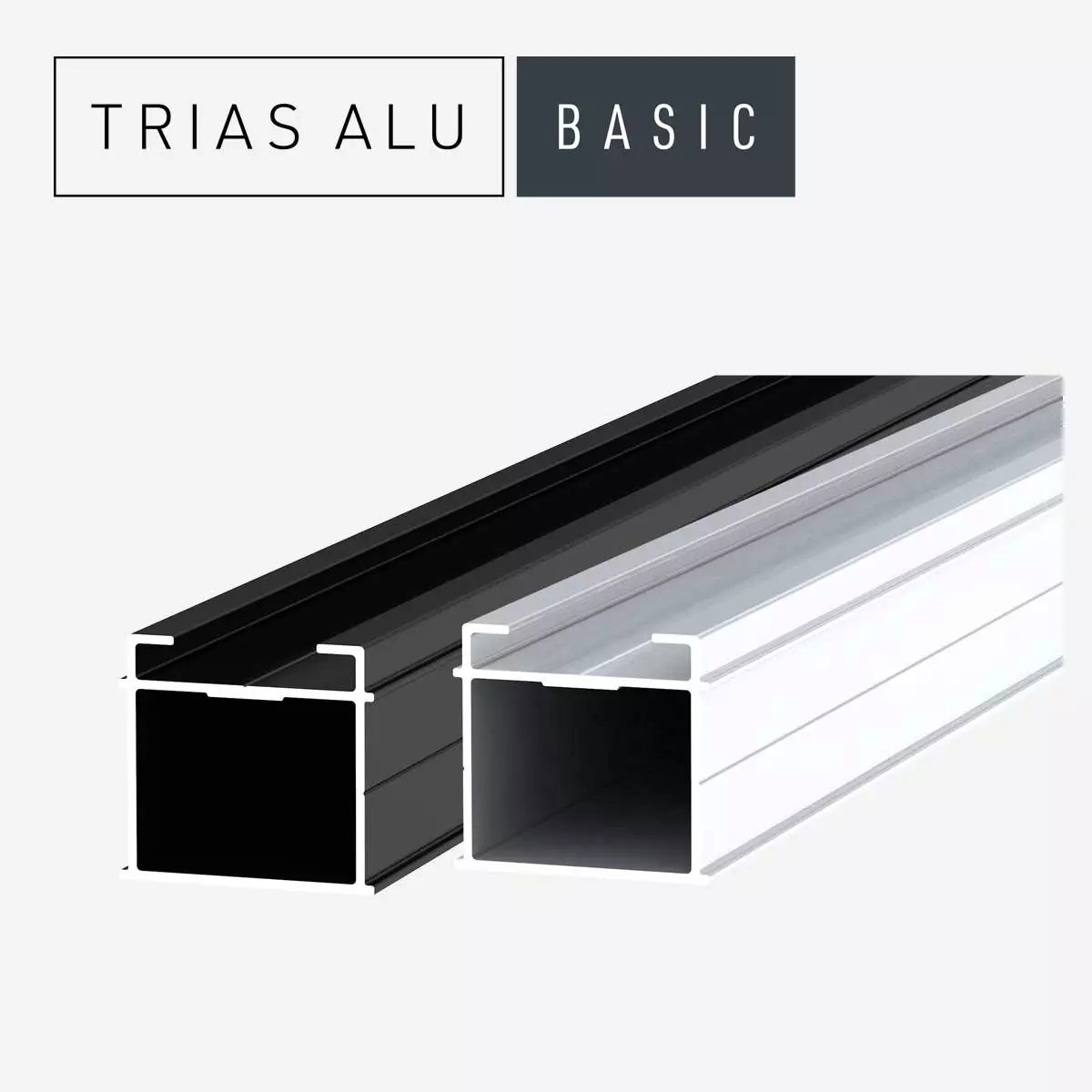
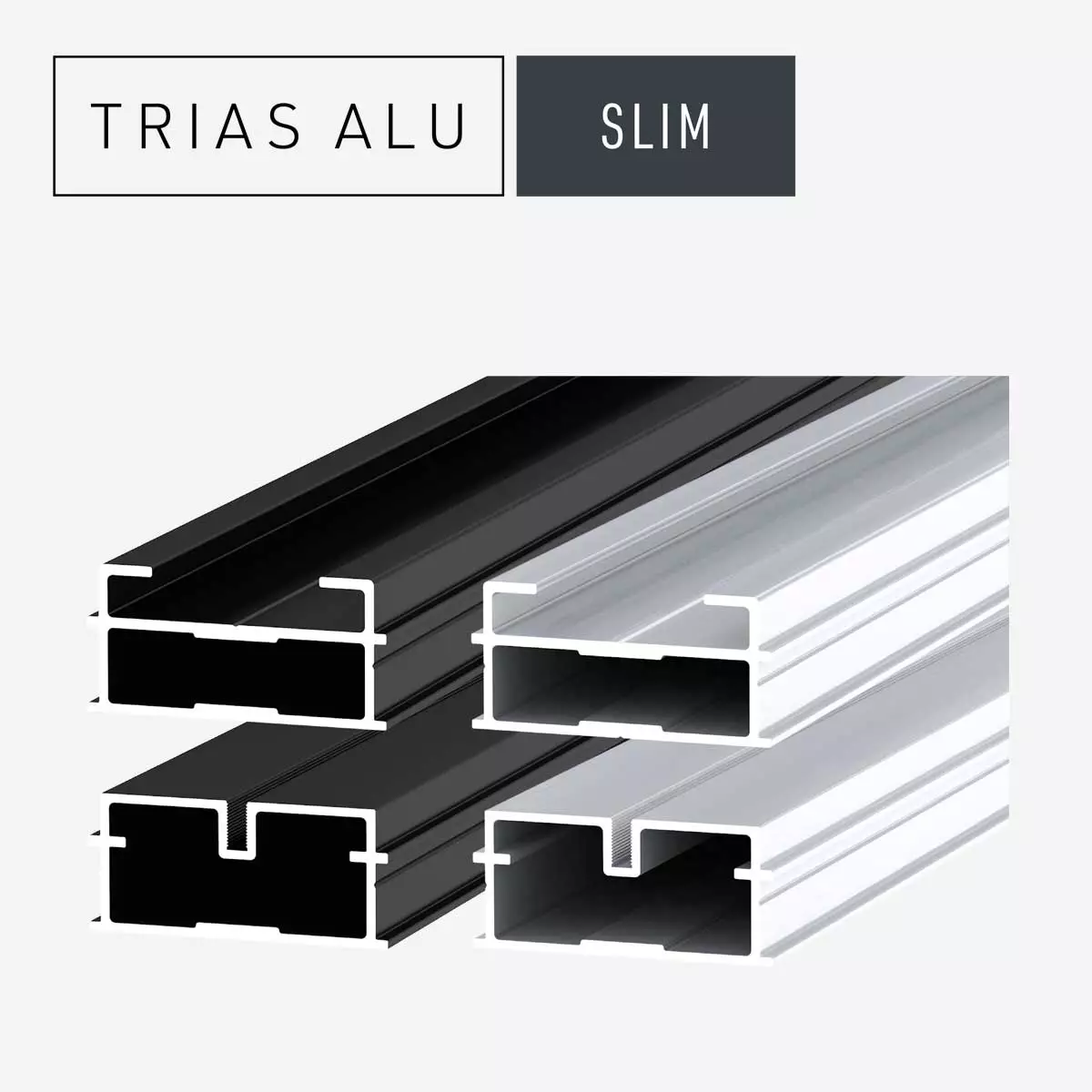
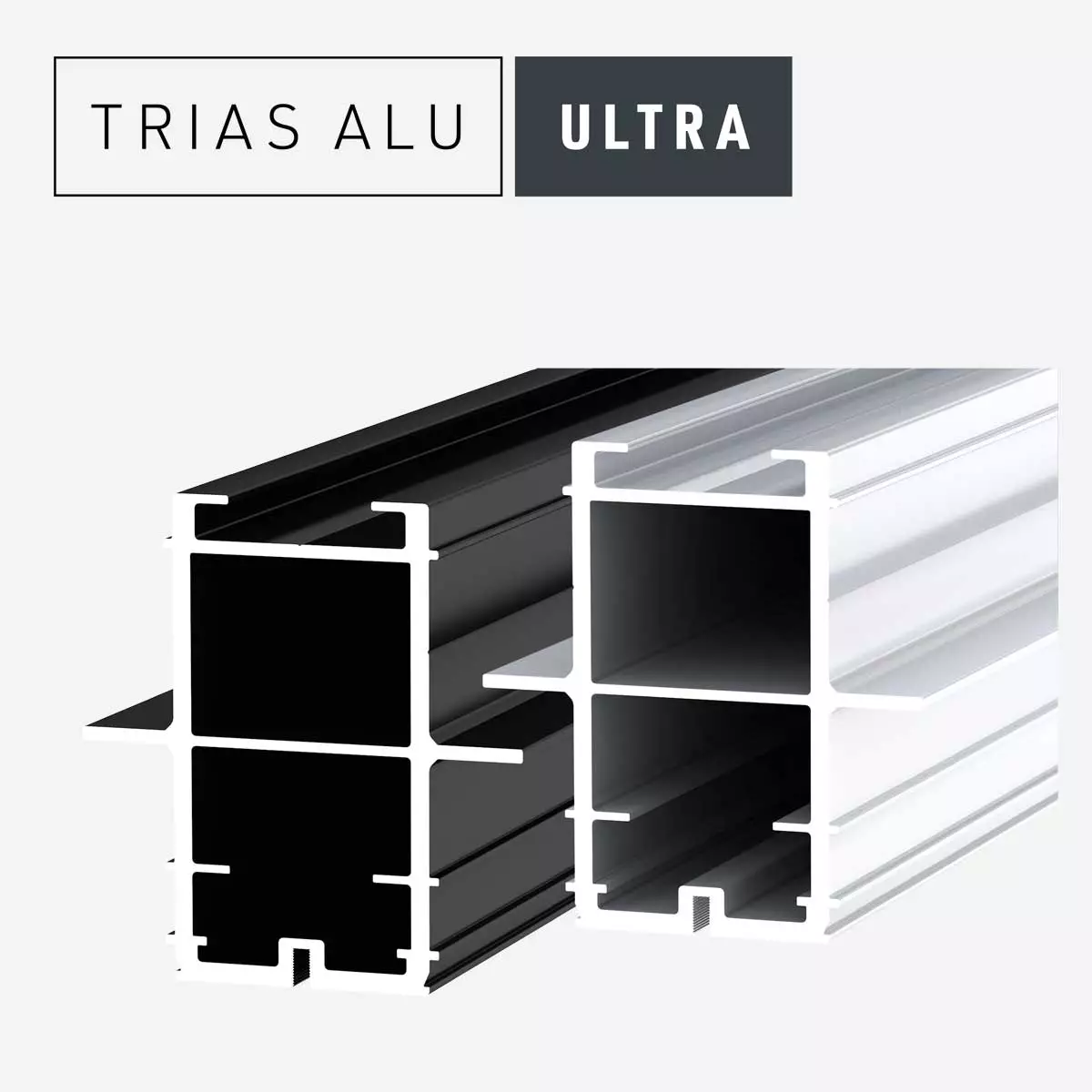
TRIAS ALU is the ideal decking substructure, as three different profile heights – TRIAS ALU BASIC (50 mm), TRIAS ALU SLIM (25 mm), TRIAS ALU ULTRA (99 mm) – provide the perfect solution for a wide range of applications: in addition to the basic system suitable for most situations, there is the SLIM profile for low installation heights and the heavy-duty ULTRA profile for large spans. The aluminium system is also well suited for use on uneven ground, as it can be levelled using pedestal supports.
Sie möchten gleich mit der Terrassenplanung starten?
For wooden and WPC decking, as well as all types of flooring panels
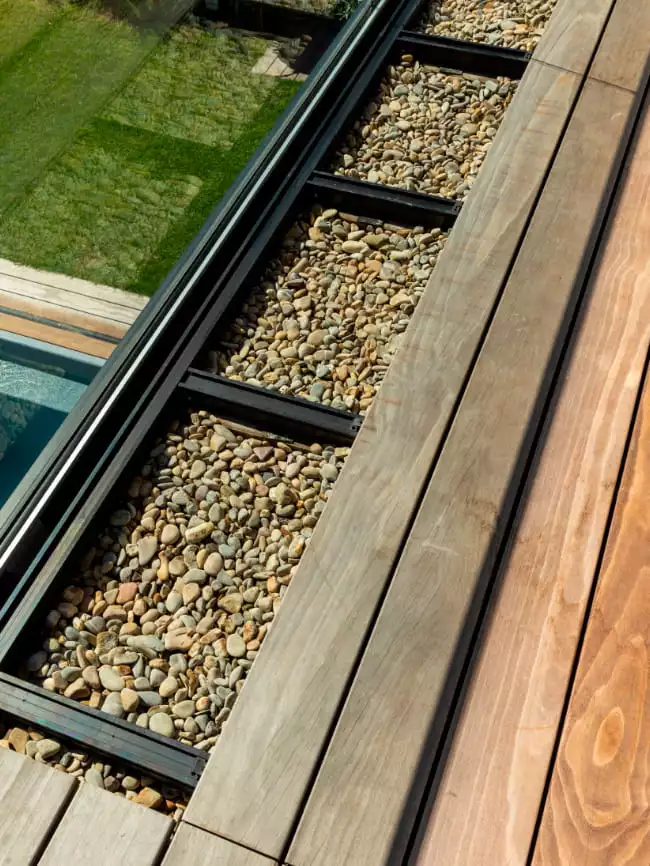
This creates a stable substructure that prevents the decking from tilting, sinking or sagging. Wooden, WPC and BPC decking boards are laid on the aluminium support system – and, thanks to rear ventilation and air circulation, are well protected against rising damp, waterlogging and insect and fungal infestation. Ceramic or natural stone slabs require a stable substructure to ensure precise joint alignment, whilst also allowing water to drain away easily. All profiles are also available as ‘Black Line’ in black anodised aluminium. Black profiles create a uniform appearance for the decking, as the material of the substructure does not show through at the joints.
Large spans? No problem for this all-rounder!
The TRIAS ALU ULTRA heavy-duty profile can span distances of up to three metres, requiring significantly fewer support points. This opens up new applications for large cantilevered structures, such as extensions or walkways for house terraces, roof terraces and balconies. Support rails are also provided for the mesh panels of the TRIAS WABIC system. When combined with the WABIC system, this creates a level support surface on which the panels can be laid freely – including fall-through protection.
Why aluminium is the better choice for
a decking substructure
With TRIAS ALU, you are choosing a robust and durable aluminium decking substructure. Sub-structures featuring aluminium profile rails in particular offer a wide range of advantages over conventional materials such as timber or WPC. Aluminium is dimensionally stable, weather-resistant and particularly durable. It does not warp or splinter and is resistant to moisture and climatic influences such as temperature fluctuations.
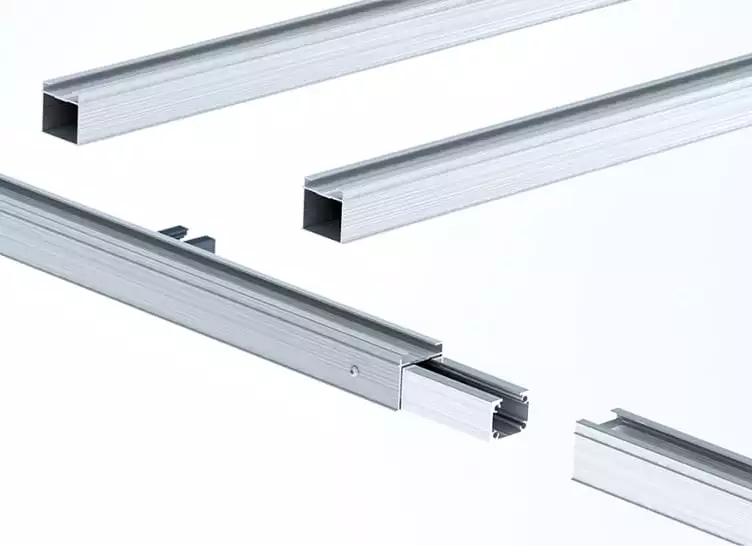
At the heart of the TRIAS ALU installation system are aluminium base profiles, which are joined using connectors to form a secure and stable substructure for the decking. This ingenious plug-in system can not only be laid horizontally in any desired shape, but also offers the option of a three-dimensional supporting structure for creating steps or platforms.
Precisely fitting connectors
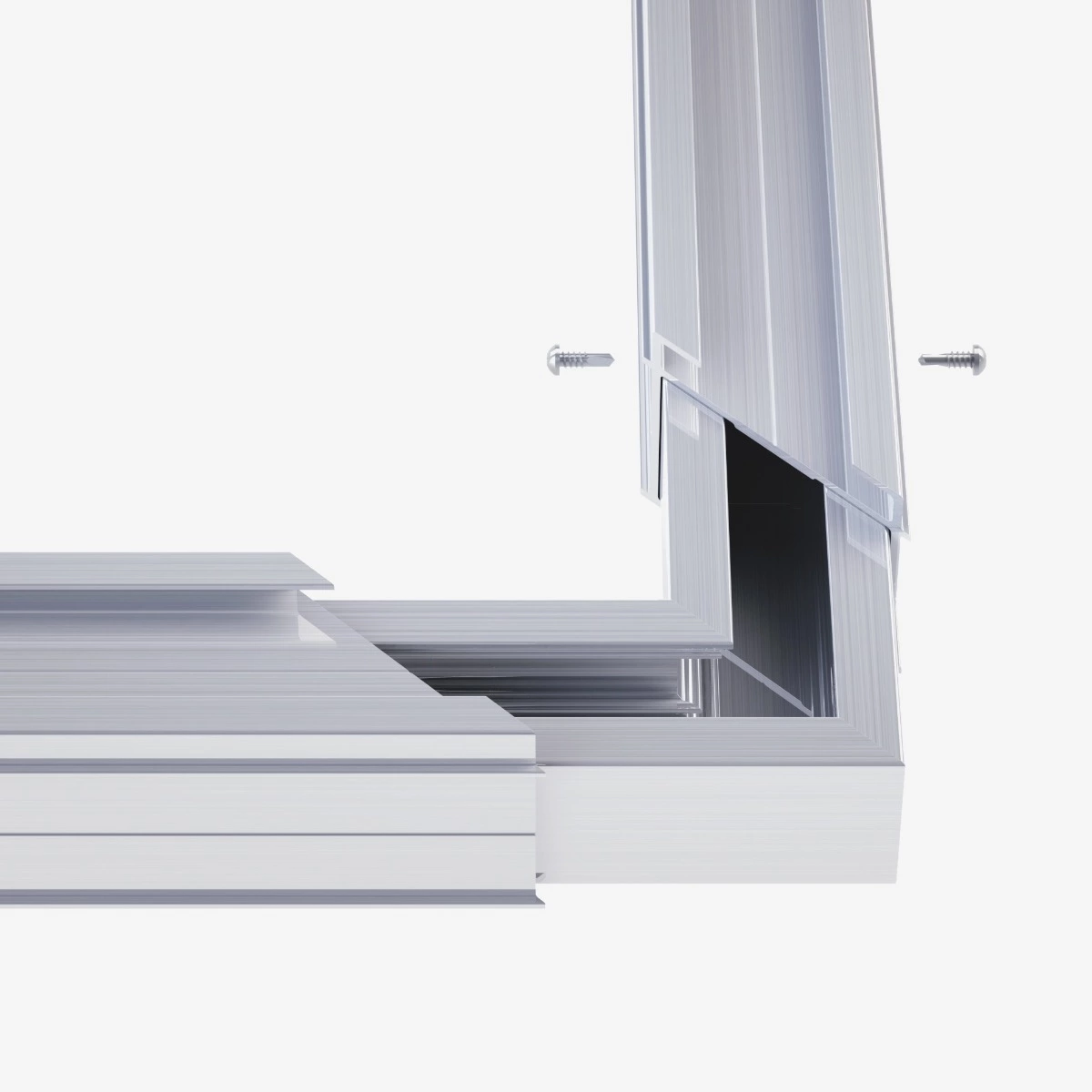
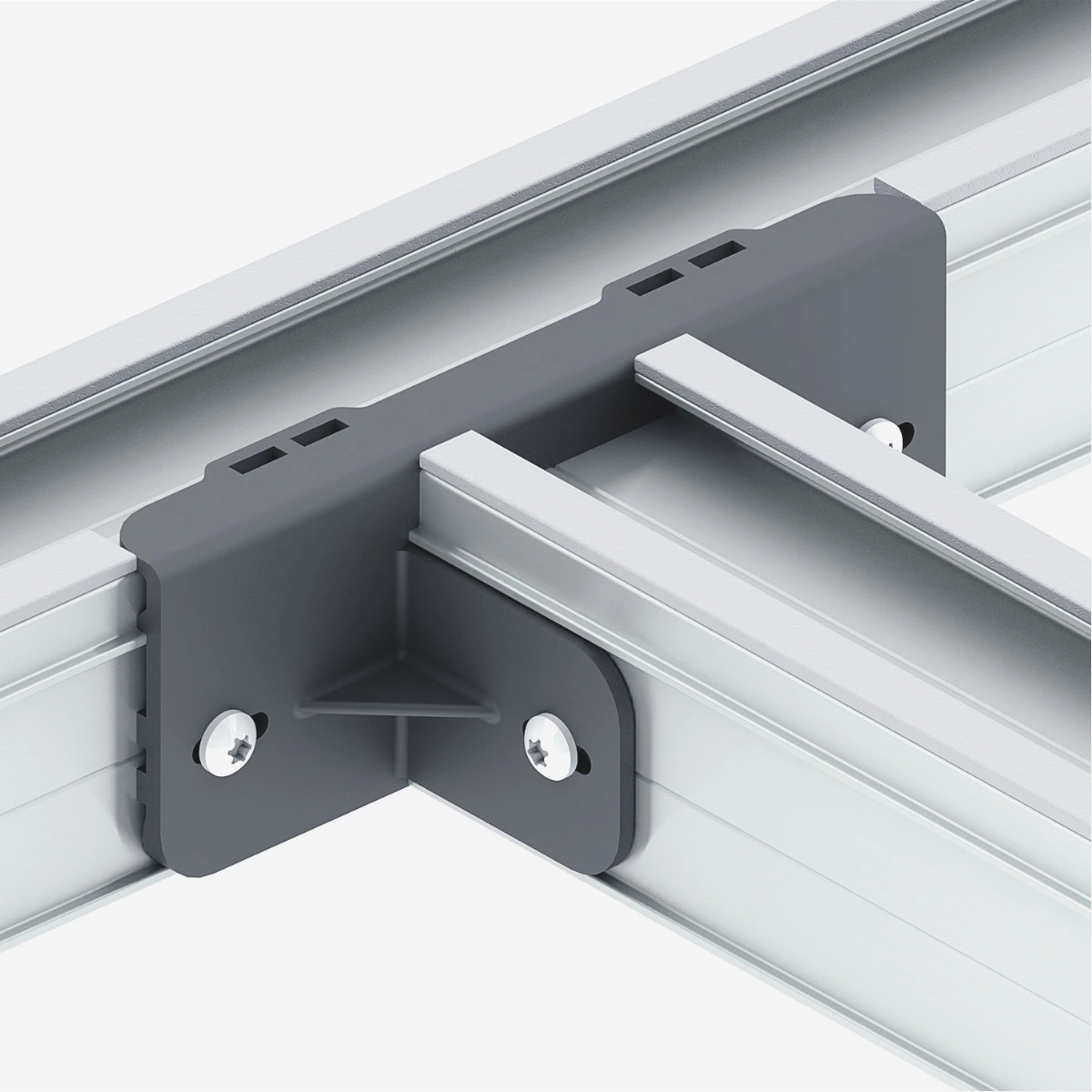
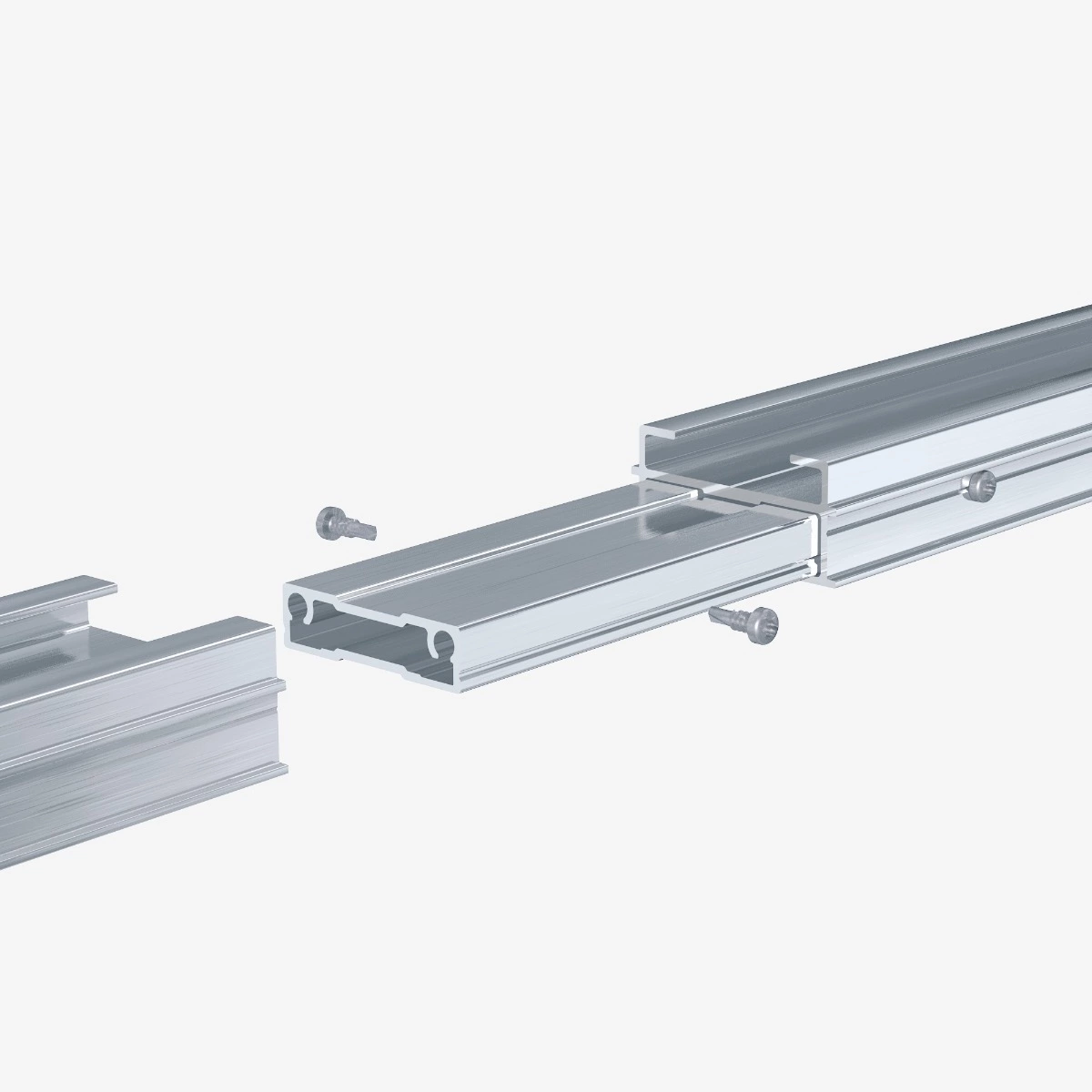
The TRIAS ALU Connector-L extends the aluminium profiles – simply slot it into place and secure it permanently with stainless steel screws. The TRIAS ALU Connector-Q is designed for cross-connections. The TRIAS ALU Connector-Q Flex enables the decking boards to be laid with pinpoint accuracy and allows for flexible alignment of the cross-connections. The TRIAS ALU Connector-C guarantees precise and stable corner joints at a 90° angle. The aluminium profiles and connectors in the particularly slim SLIM version are suitable for roof terraces and other terrace designs with low installation heights.
Mulitclip-T for decking boards
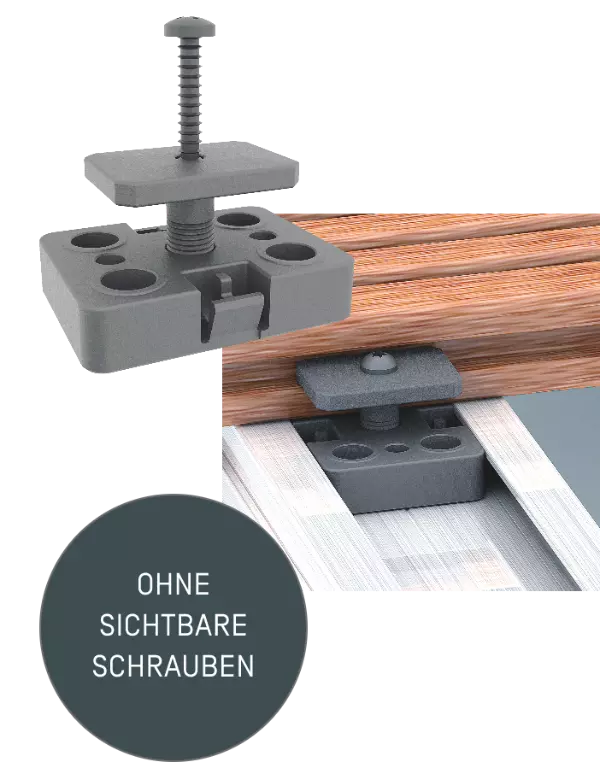
Just a warm wooden surface underfoot, with no unsightly screw heads: that’s how many people would like their decking to be. With the Multiclip-T, decking boards made of wood, WPC or BPC can be fixed in such a way that no metal is visible or noticeable on the surface. The Multiclip-T makes it easy to fix grooved decking boards invisibly by simply clicking them into place. It also ensures a uniform board spacing of 7 mm (TRIAS ALU Basis and Slim-Basis systems).
Also suitable for boards without a groove
If you have chosen decking boards without a groove for your decking, you can screw them directly onto the TRIAS aluminium substructure. The self-tapping TRIAS decking screws with milling ribs, fine thread and friction shank are ideal for this purpose. They are specially coated for maximum corrosion resistance.
Multiclip-X for patio slabs
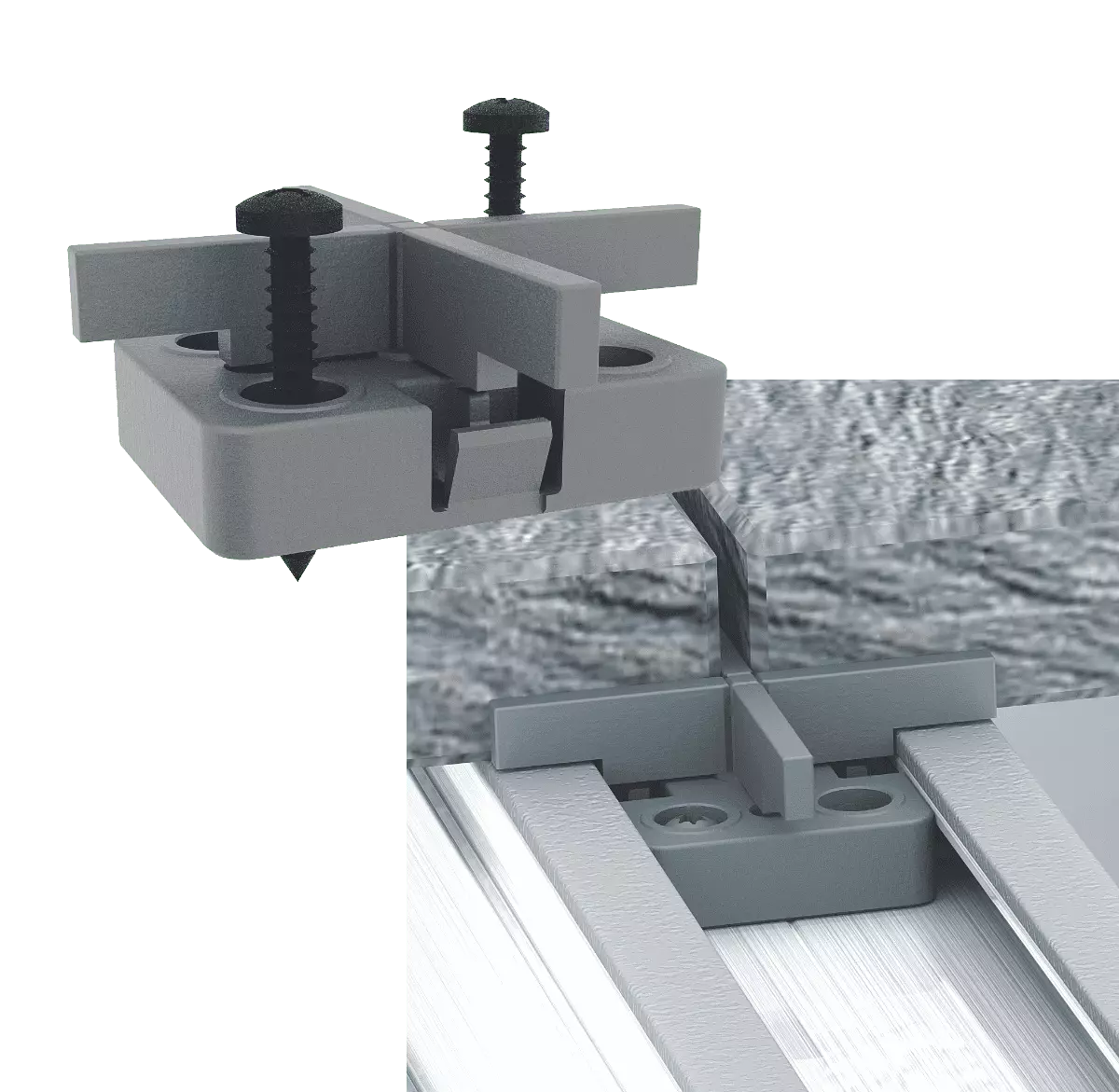
Any unevenness is particularly noticeable when laying panels with sharp edges. This is where the TRIAS ALU Multiclip-X, made from sturdy PA6 plastic, is indispensable. The Multiclip simply clicks into the groove of the TRIAS ALU base aluminium profiles and ensures an even joint pattern with a slab spacing of exactly 3 mm. It is suitable for slabs and tiles with a minimum thickness of 10 mm. Thanks to pre-marked break lines, the protruding ends of the cross-shaped Multiclips can be neatly snapped off at the edge of the decking.
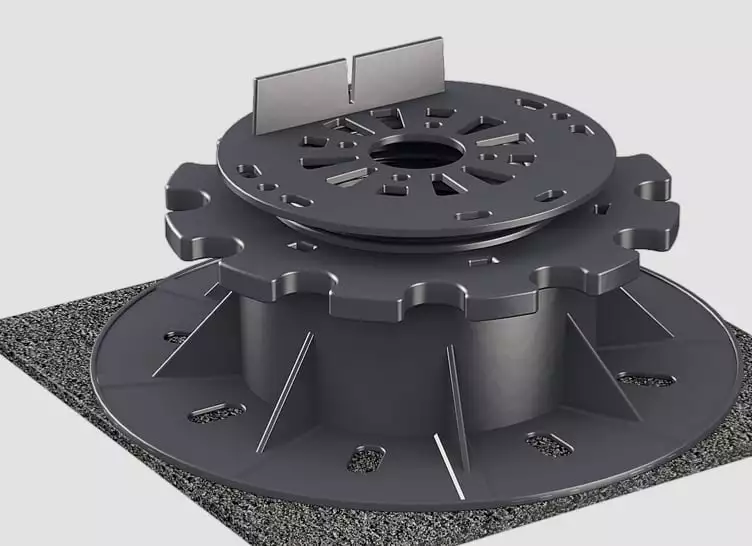
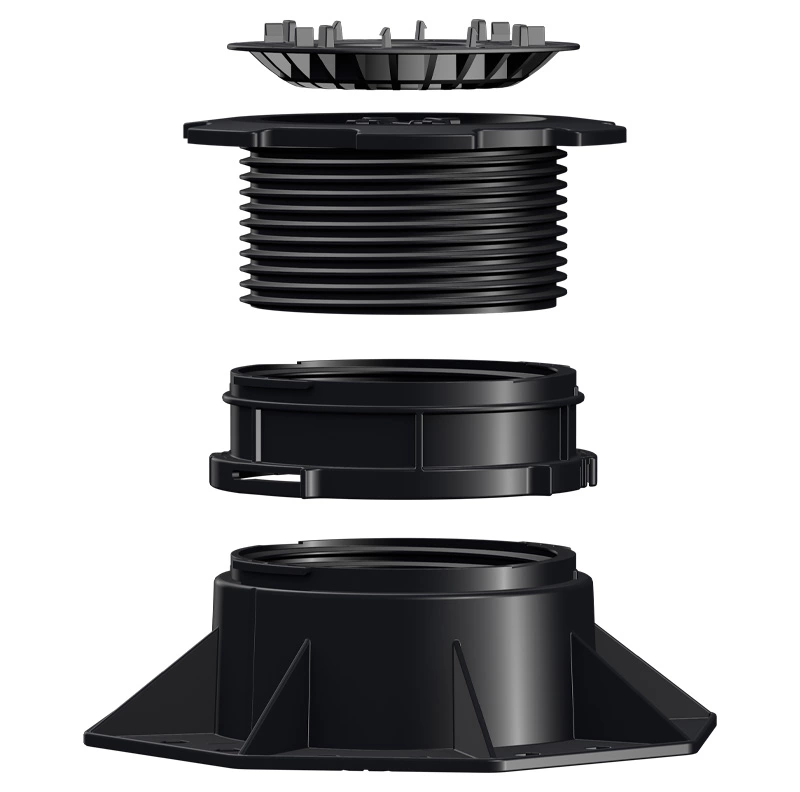
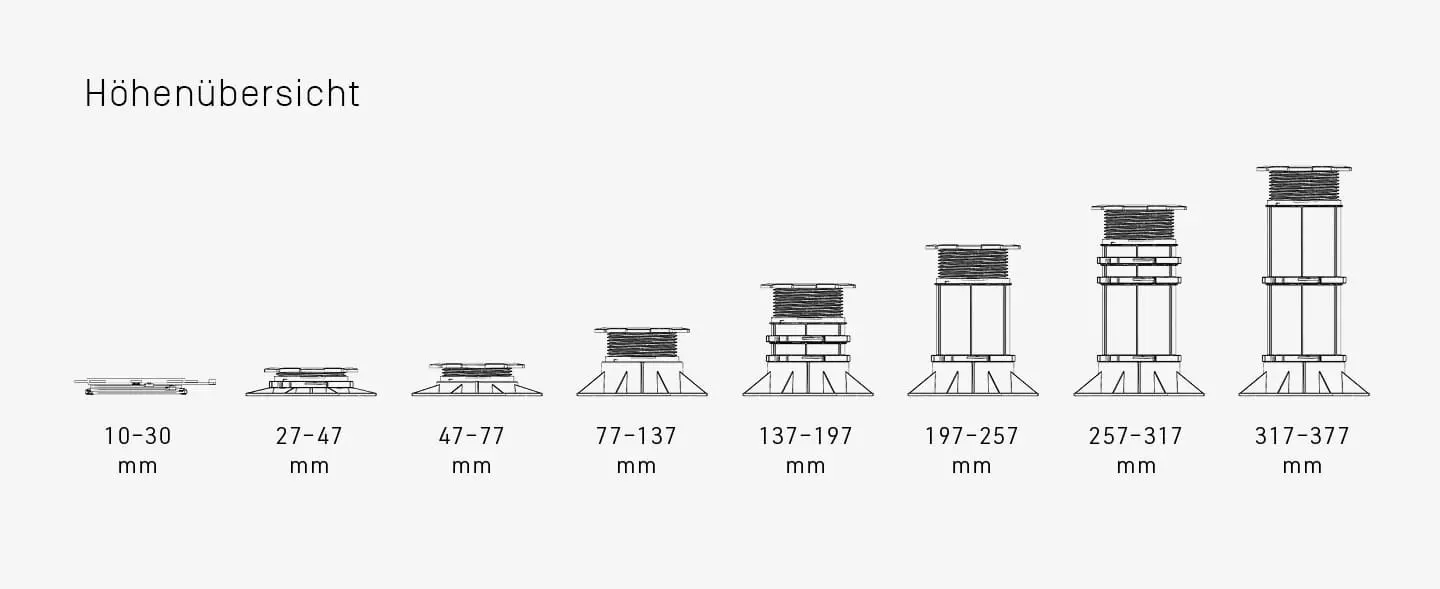
The EXTENDER-PLUS system allows the height of the TRIAS HELIX pedestal supports to be adjusted with particular flexibility and efficiency. To do this, the extenders are simply placed on top of the MULTIBASE pedestal and securely fixed in place. This allows the installation height to be varied quickly and easily between 10 and 137 mm directly on site. Four extension modules measuring 10, 30, 60 and 120 mm are available, enabling versatile use, even in challenging installation situations. Naturally, TRIAS Extenders can be combined with one another.
Fine adjustment is carried out continuously via the integrated adjustment thread, allowing for precise height adjustment. For particularly quick and convenient installation, the TRIAS KEY can be fitted into a cordless screwdriver.
In addition, the MULTIBASE adjustable foot is available in various base heights. Here too, TRIAS has ensured freedom of design.
Terrace pads for small differences in height
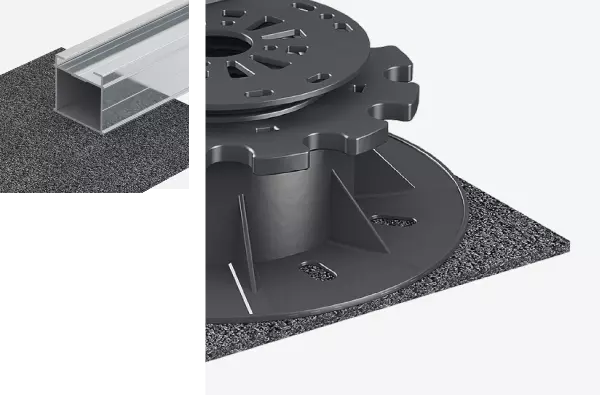
The rot-proof TRIAS pads, made from rubber granules, dampen impact noise and reduce waterlogging. The weather-resistant underlay is non-slip and, in thicknesses ranging from 3 to 20 mm, compensates for small differences in height. Terrace pads with an aluminium barrier layer are available specifically for PVC substrates; this prevents the migration of plasticisers. The pads should be laid at the correct height and must not be stacked.
What types of decking are available?


What are the advantages of an aluminium substructure compared to a timber substructure?
The enclosed TRIAS frame construction is extremely sturdy and, unlike timber, is weather-resistant, retains its shape and is considerably more durable. Furthermore, aluminium cannot crack or splinter and does not require a protective coat of paint. A particular advantage is that lightweight aluminium is ideal for roof terraces.
Can I combine different types of decking?
Is the aluminium substructure also suitable for roof terraces?
Due to its light weight, the aluminium substructure is ideal for roof terraces. The terrace decking itself must be adapted to the structural conditions. Please consult a specialist for advice on this. The aluminium profiles and connectors from the TRIAS ALU Slim system, with their particularly low installation height, are particularly suitable for roof terraces.
What floor plans are possible?
The flexible design principle allows for more than just rectangular or L-shaped terraces. You can divide large areas into sections, for example using steps or different floor coverings. The sturdy yet lightweight aluminium structure can be easily extended and adapted at a later date thanks to the plug-in system. It is also possible to extend the terrace area without any problems.
What are the requirements for the substrate?
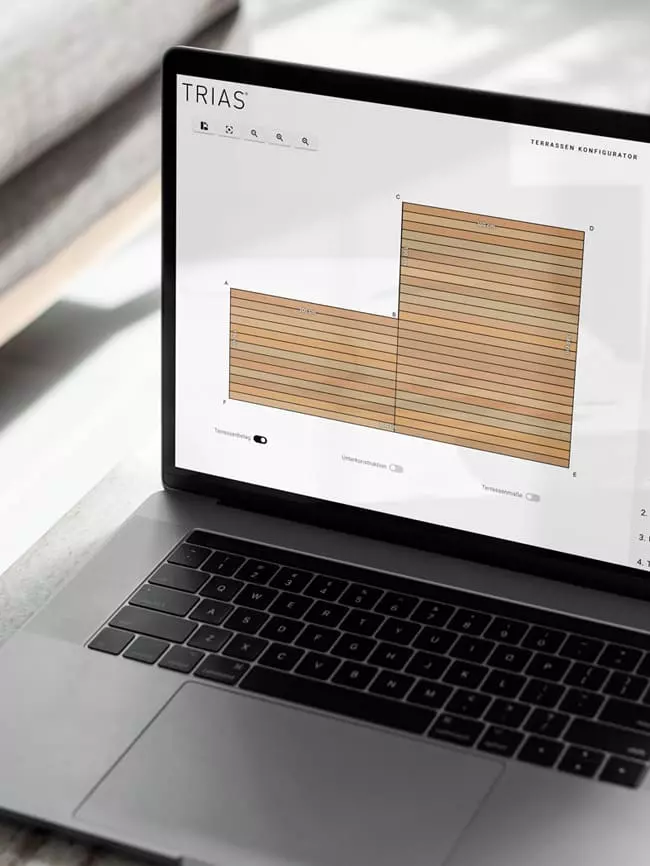
The TRIAS ALU decking substructure requires a solid base for the support points, such as an existing slab, a strip foundation, laid kerbstones or point foundations. The TRIAS ALU system allows for large spans and requires only a few support points. Wherever it is difficult to create support points, pedestal supports ensure level compensation. With the TRIAS decking configurator, you can easily calculate the requirements for your decking online.
How do I work out the spacing for the TRIAS aluminium decking profiles?
The spacing between the rails depends on the decking material and the installation method. For slab decking, the spacing is determined by the size of the slabs. It should not exceed 60 cm. For plank decking, the spacing should be no more than 40 cm. With the TRIAS Decking Configurator, you can easily calculate the requirements for your decking online.
Can you see the aluminium substructure shining through between the floor covering joints?
With silver-coloured aluminium and dark decking, the decking substructure may show through. In this case, it is best to choose TRIAS aluminium profiles with a black anodised finish or the TRIAS Wabic decking system.
For what installation height of the decking substructure is TRIA ALU suitable?
The TRIAS HELIX pedestal allows for an installation height of between 10 and 377 mm. The base height starts at 27 mm. Using the TRIAS HELIX extenders in 10, 30, 60 and 120 mm, you can extend the pedestal mount up to 377 mm. The modules can be combined as required. For very low installations from 10 mm, there is the TRIAS HELIX Flat pedestal. If you can manage without a pedestal support at all, the TRIAS ALU Slim profile allows for an installation height of just 35 mm with 10 mm-thick panels. Depending on the building regulations in your region, a railing may be required, for example. Please consult a specialist contractor for advice.
What sort of substructure is suitable for the balcony?
If a low installation height is required for a balcony, the flat aluminium profiles, which are just 25 mm high (TRIAS ALU SLIM), are used. Practical levelling pads are available to ensure the necessary gradient is achieved. The narrow decking profile is also recommended for the refurbishment of old decking substrates.
What are TRIAS pressure pads used for?
If the structure is very low and minor differences in height need to be levelled out, we recommend non-slip TRIAS pads in various thicknesses. TRIAS pads can compensate for a difference in height of up to 20 mm. Stacking them higher is not recommended, as this creates too much give and is uncomfortable when walking on them. Larger differences in height are compensated for by height-adjustable levelling feet, known as pedestal supports. You can find an overview in the product overview.
Is it necessary for the floor coverings to extend beyond the edge?
Ensuring the flooring protrudes evenly allows for a neat finish. With plank flooring, this is necessary to provide a gap at the edge for fixing with screws. Another reason for this gap is to allow for better ventilation of the adjacent masonry. We recommend laying the first rail along the house wall with an overhang and an additional clearance from the wall of at least 2 cm.
How do I work out the material requirements for my aluminium substructure?
To help you determine the number of suitable components for your project, we have developed the TRIAS Decking Configurator for you.
What tools do I need to install the TRIAS ALU decking system?
The simple click-fit system requires only standard tools such as a cordless screwdriver, spirit level, folding rule and metal saw. With the Multiclip, floor coverings can be easily clicked into place and screwed down. Guide grooves in the profiles make positioning easier, and floorboards can also be screwed down directly.
- © Blauform GmbH
- Legal Notice
- Data Protection
- Terms and Conditions
Change cookie settings