
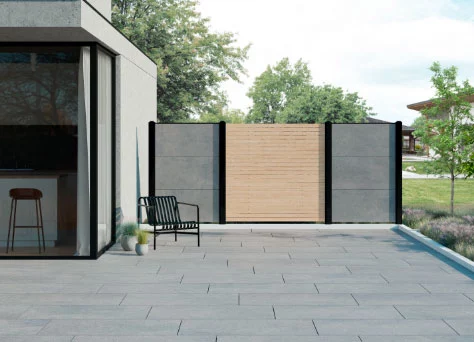
Es handelt sich um keramische Platten aus Feinsteinzeug. Für die Herstellung werden fein vermahlene Rohstoffe gepresst und gebrannt. Typisch für Feinsteinzeug ist, dass durch die hohen Brenntemperaturen die Poren der Oberfläche schließen. Das Material wird wasserdicht. Über Druck- und Prägetechniken können die Oberflächen vielseitig gestaltet werden. Holz ist nicht enthalten.
Trending: Wood-effect tiles
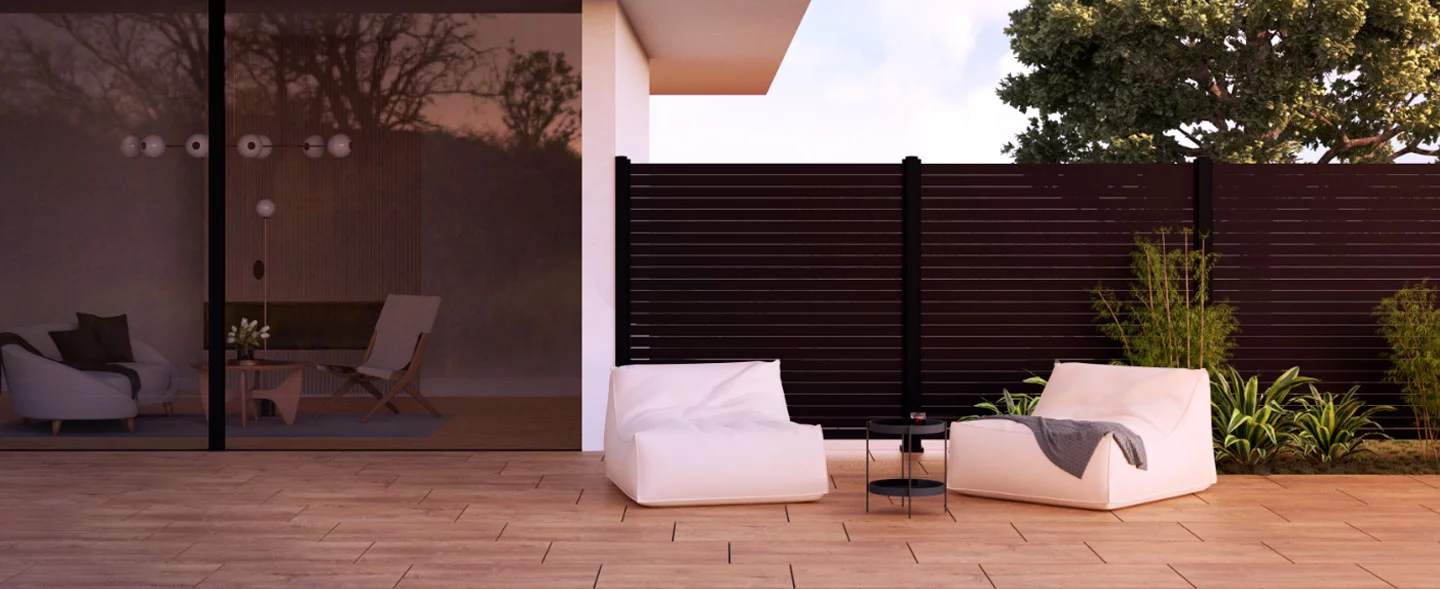
It sounds ideal: the cosy feel of a wooden floor combined with the easy-care qualities of tiled flooring? What more could you want? Tiles with a wood-effect finish are modern and have a lot to offer. However, there are significant differences. Read on to find out what to look out for.
What are the advantages of wood-effect tiles?
Their excellent care properties and low maintenance requirements are considered unrivalled. Unlike wooden floorboards, tiles are easy to clean and are resistant to cold, heat and damp. Unlike wood, they do not change colour over time. The long-term maintenance requirements are therefore minimal. Last but not least, tiles are often more affordable than wooden floors.
What are the disadvantages of wood-effect tiles?
Wood-effect tiles do not feel as soft as real wooden flooring. They feel slightly harder underfoot. Furthermore, tiled floors do not look quite as cosy as natural wood. Depending on the architectural style, flooring made from wooden or WPC planks may simply be a better fit. Another point to bear in mind is that ceramic tiles retain the ambient temperature for longer than plank flooring. After prolonged exposure to direct sunlight, tiled floors can become extremely hot – temperatures of up to 70 degrees are possible. For sunny south-facing areas, you should therefore only choose light colours.
Benefits at a glance:
- authentic wood-effect finish
- a texture you can feel
- sturdy and easy to maintain
- resistant to damp and cold
- resistant to cleaning products
- no mould or moss
- no colour changes (greying, etc.)
- UV-resistant
- wide range of sizes and wood finishes
- low maintenance
- Suitable for indoor and outdoor use
- Cost savings (compared to real wood)
Disadvantages at a glance:
- a slightly firmer ride
- Doesn’t look quite as cosy
- Heavier (roof terraces!)
- Low water absorption -> risk of slipping
- May break under load without break-through protection
- Installation may be more labour-intensive than with floorboards
- May be slightly more expensive than floorboards
Conclusion
If you’re looking for a low-maintenance patio but don’t want to miss out on the warm look of a wood grain, ceramic tiles with a wood-effect finish are a good choice. Almost every type of wood is available as a replica. It is important to ensure the surface is slip-resistant. On south-facing terraces in particular, only light colours should be laid. The price differences are enormous. It’s worth working out the costs of the various options. As with all tile flooring, you’ll need to allow for a certain amount of waste, depending on the laying method. Another tip: if you want to build your own patio, you might find it easier to use planks. As with all tile flooring, you should buy enough spare tiles. If you plan to lay the tiles on pedestals, you’d be well advised to use a break-through protection system (TRIAS WABIC). Last but not least, it must be said that the appearance of a floor made from wood-effect porcelain tiles is more than just a mere imitation of a wooden floor. New formats and laying patterns open up unusual design possibilities and create a unique, modern look. Furthermore, many tiles are suitable for both outdoor and indoor use. This allows for visually consistent flooring throughout living spaces and adjoining terraces.
The right substrate for wood-effect tiles
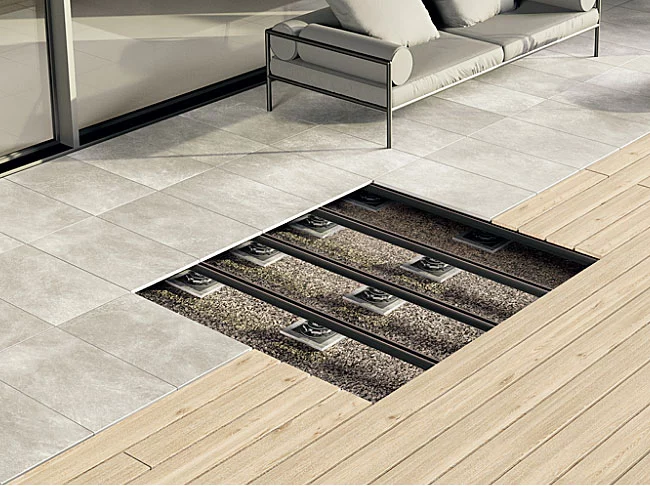
A terrace is only as good as its substructure, so it is important to choose a good one. Unlike the floor covering, substructures are more difficult to access, which makes repairs very labour-intensive. TRIAS offers two high-quality substructures for terraces with wood-effect tiles.
TRIAS WABIC
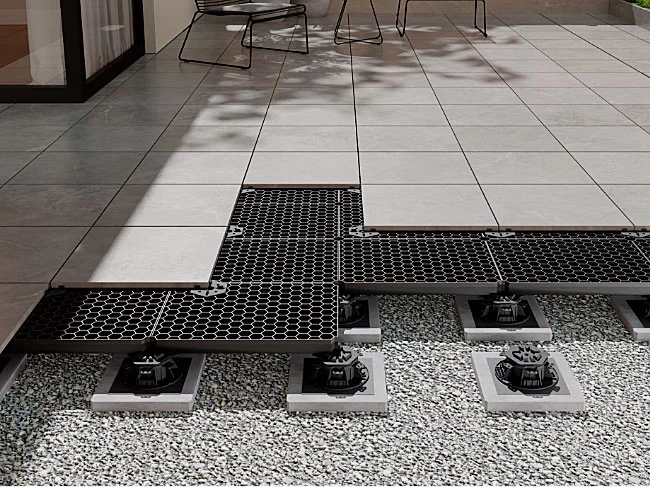
The Trias Wabic decking substructure offers effective fall-through protection for decking with slab paving. The system allows for creative laying patterns. This is made possible by the ‘X-Pad’ laying crosses, which can be positioned freely across the surface.
View the installation system
TRIAS WABIC: Better with anti-break-in protection
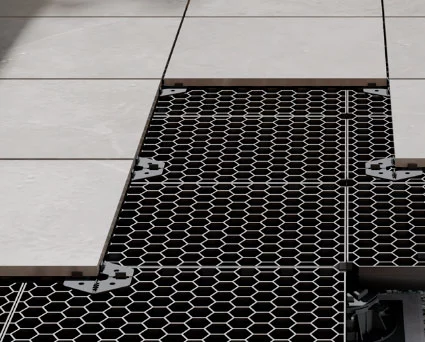
Tile surfaces can crack due to weather conditions or under load. This results in large, sharp-edged shards. On terraces supported by pedestals in particular, there is a risk of falling through and injuring oneself. Furthermore, loose shards may fall from balconies or roof terraces. The Rasterboards from the Trias Wabic system provide long-lasting protection for attractive tiled surfaces against damage. Should breakage nevertheless occur, the shards remain on the substrate. It is not possible to fall through.
Flexible installation with X-Pads
Panels of a wide variety of sizes can be laid freely on the uniform base surface formed by the grid elements of the TRIAS WABIC system. The system’s X-Pads (laying crosses) can be positioned as required, allowing for a wide variety of laying patterns. A range of joint widths is available.
Seamless transitions from the inside to the outside
Many porcelain stoneware tiles are suitable for both indoor and outdoor use. The same flooring material can therefore be used for the living and dining areas as well as for the adjoining terrace. This creates harmonious transitions between spaces and, as a result, a very spacious feel. Indoors, wood-effect tiles are particularly popular for bathrooms and kitchens. After all, they are easy to clean and, unlike wood, are resistant to moisture. These same properties also make them a very popular choice as a flooring material for terraces.
Woraus bestehen Fliesen in Holzoptik?


Was ist der Unterschied zwischen Fliesen in Holzoptik und Holzfliesen?
Sogenannte „Holzfliesen“ bestehen aus kurzen Holz- oder WPC-Dielenabschnitten, die zu fliesenartigen Quadraten verbunden wurden. Die quadratischen Elemente lassen sich einfach verlegen und sind für Balkone sehr beliebt. Fliesen in Holzoptik sind dagegen – wie der Name schon sagt – echte Fliesen und werden beispielsweise aus Feinsteinzeug hergestellt. Lediglich die Oberfläche imitiert den typischen Holzcharakter. Verarbeitet werden Fliesen in Holzoptik wie klassische Fliesen.
Welche Verlegemuster passen zu Fliesen in Holzoptik?
Wer sich für Fliesen in Holzoptik entscheidet wünscht sich eine holzähnliche Anmutung. Daher sind alle Verlegemuster besonders attraktiv, die man auch von Dielenböden kennt. Dazu gehört der Halb-, Viertel oder auch Drittelverband. Irritiernd wirken strenge Kreuzfugen und insbesondere der römische Verband. Mit diesen Verlegemustern assoziiert man eher Steinfliesen oder Natursteinböden. Besonders spannend, wenn auch aufwändig ist das Fischgrätmuster. Es lässt sich mit Keramik in Holzoptik authentisch nachbilden. Die Fläche muss genügend groß sein, damit diese Bodengestaltung wirkt. Für längliche Fliesen ist das Schiffbodenmuster sehr beliebt. Für rechteckige Formate ist es der Halb- oder Viertelverband.
Welche Verlegemuster passen zu Fliesen in Holzoptik?
Üblich sind rechteckige Formate, da so die natürliche Maserung besser zur Geltung kommt. Je schmaler und länglicher, desto mehr erinnern Fliesen in Holzoptik an authetische Dielen. Erhältlich sind unterschiedlichste Größen beispielsweise 20x80, 20x114, 20x120, 30x120, 20x160 oder 40x160 cm. Grundsätzlich muss beachtet werden, dass längliche Fliesen eine leichte Krümmung aufweisen können, sie sind also etwas schwieriger zu verarbeiten.

